

A Case for Language Priming
The fastest road to implicit comprehension

Following a comment on one of my articles Polyglot in Progress Issue #9, Curlyrise asked a important question:
At the time, my answer to this question came from experience rather than research. Today, I want to unpack the thought process behind it and share what I’ve since learned…along with some science.
My Personal Experience
I have been exposed to Japanese for more than twenty years. When I finally took a formal Japanese class in university, I realized something surprising: many of the words sounded familiar. I had heard them countless times before but had never known their meanings.
That experience showed me that passive exposure matters, even before I learnt the language. I had been absorbing the rhythm and melody of the language. Over time, I found myself imitating the Japanese–English accent and reproducing short phrases naturally. My ears had already been trained, long before my brain caught up.
The Science
Research supports the idea that listening before understanding can help adult learners build the foundation for language learning.
Consider these studies:
Second language speech learning: Theory, findings, and problems. Flege (1995): showed that extensive auditory exposure helps learners form new sound categories, even without knowing what the words mean.
Learning pitch patterns in lexical identification by native English speakers. Wong and Perrachione (2007): found that English speakers who passively listened to Mandarin tones improved their ability to recognize pitch patterns, despite not knowing the language.
Training Japanese listeners to identify English /r/ and /l/: Some effects of perceptual learning. Bradlow et al. (1997): demonstrated that Japanese learners improved their ability to distinguish English /r/ and /l/ sounds through listening alone.
It is often said that children lose the ability to distinguish sounds not present in their native language during their first year of life, through a process called perceptual narrowing. However, these studies show that adults can still learn to perceive and distinguish foreign sounds with enough exposure and practice.
Thus, listening to the language before you understand it, is the first step in language acquisition.
What I Call Language Priming
Language Priming is the first phase of my learning process. It is a passive listening exercise designed to immerse my brain in the soundscape of a language before I begin studying it formally. Ideally, after achieving between 100-150hrs in this initial phase, I would naturally continue passive listening in the background even as I transition to active learning. This should keeps my ear tuned and immersed.
Why Listening Before Understanding Works
Normally, we would start with learning some vocabulary and grammar of the new language then try to listen. However, in priming the brain via passive listening helps the brain to:
Build sound patterns early
Develop familiarity with the language and reduce feeling of “foreignness”
Strengthen listening comprehension
Activate implicit learning — the kind that happens naturally without conscious effort
All of these effects I saw recently in my Telugu language priming journey: Language Priming – My 100-Hour Passive Telugu Listening Experiment. Listening before understanding is simply a smart way to training the brain.
The Value of Implicit Comprehension
I recall last year when I started learning French that if I was struggling with a piece of audio, it would feel the front of my brain working as it felt as if it was warming up, and once I started doing easier, familiar audios or was just absorbed in the audio, I would feel a sensation in the sides of my brain.
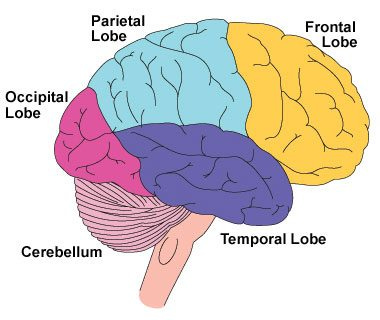
This was because early in language learning, the brain treats the new language as a puzzle. It actively tries to match sounds to known words, recall grammar rules, and hold bits of audio in short-term memory long enough to interpret them. These are activities of the prefrontal cortex, the part that does the manual labour of understanding.
Easier and familiar audios would have likely activated the Temporal Lobes. At this point the brain was doing pattern-recognition, matching sounds to meaning automatically, thus minimal working memory was involved, making comprehension implicit.
One major benefit of Language Priming is precisely this transition. It helps the brain move from the prefrontal cortex to the temporal lobes. By training the auditory system to recognize and predict rhythm, tone, and structure, you free the prefrontal cortex for higher-level comprehension later.
When Does Language Priming Stops
After completing around 150 hours of Language Priming, I begin my next phase: roughly 1,500 hours of Comprehensible Input. This is active, level-appropriate audiovisual interaction with the language, aimed at building oral comprehension.
Language Priming continues naturally in the background until a high level of comprehension is achieved. At that point, the nature of listening changes. Passive listening turns into comprehensible input, and there is no further need to prime the language.
A simple marker I use to recognize this transition, what I call crossing the Comprehension Threshold, is when I find myself understanding an audio while fully absorbed in another task. For example, you might realize you can follow an entire section of a radio program in your target language while deep cleaning on a weekend. That’s when you know your priming phase has done its job.
In Summary
Every new spoken language begins in the ear. When the brain is given time to listen without expectation, it prepares itself to understand without effort. Language Priming creates a space for the unfamiliar to become familiar. Once that happens, true language acquisition takes care of itself.
Engineer Your Own Polyglot Brain
For unfiltered transparency, deeper dives into the data, and the raw realities of building a polyglot brain with quantifiable results and strategic insights you won’t find anywhere else, hit that Subscribe button. I’m honored to have you alongside me in the Acquisition Laboratory.
Thank you for Reading!!!
Hi Shamar! Do you think it matters to only use music in your target language as priming? I can’t really see myself listening to 150 hours of conversations I don’t understand. Not because it’s boring, but because it would take a lot of my focus (trying to get what they say, anyway) and multitasking would be pretty hard. Somehow music doesn't have the same effect on me.
What a nice surprise to get such a detailed and thoughtful response to my recent comment! Thank you for the interesting read. I'll think about giving it a try next time to see if it works for me. The only thing I'm a bit unsure about is the 'background noise'. I'm quite sensitive to it, and having something in the background (it's the same whether it's a podcast, music or TV) can be quite stress-inducing for me. I need peace and quiet and to tackle one thing at a time. Nevertheless, I think this approach is worth trying to see if I find a way to adapt it to my individual needs and journey.